
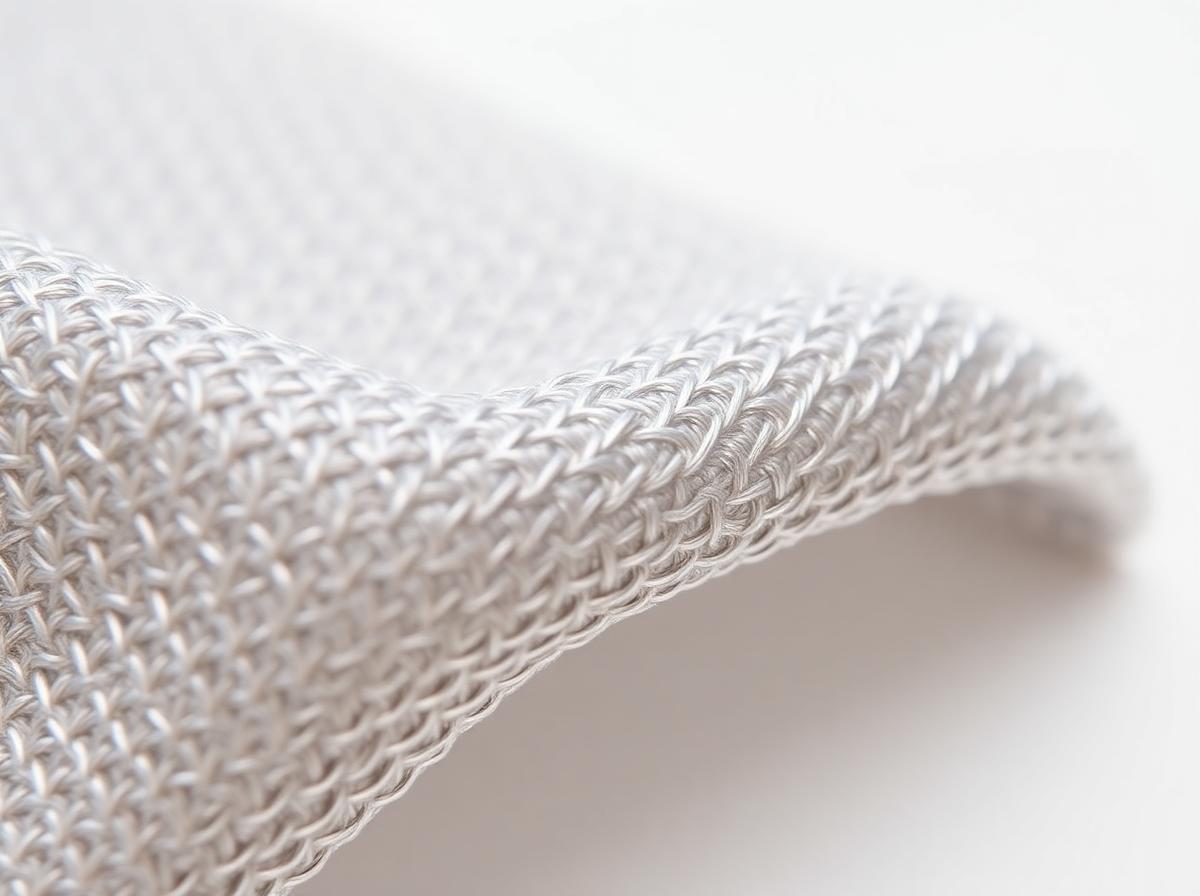
Single jersey / Interlock double-knit
Knitted Nickel Mesh
The standard PTL between bipolar plate and electrode in alkaline stacks. Single jersey (660-850 g/m², 90-98% porosity) for small-area stacks under 10 bar clamping , elastic enough to follow plate surface irregularities. Interlock (850-1,150 g/m², 85-92% porosity) for stacks over 0.8 m² where crush resistance matters. In 2019, a German field trial returned six stacks with PTL compression-set failure , single jersey had work-hardened after 5 years of thermal cycling, losing 40% thickness. We switched that customer to interlock. No failures since. Wire is always Ni201 , the knit has ~12,000 contact points per m², each a potential corrosion site with standard Ni200. Every roll ships with compression-recovery data at 5/10/15 bar, EN 10204 3.1 cert, ISO 9044 and ASTM B456.
Technical specifications
Rev. 2026-Q3 - compression recovery data available on request
| Alloy grades | Ni200 (UNS N02200), Ni201 (UNS N02201), N6 (Chinese GB) |
|---|---|
| Knit structure | Single jersey (single-bed) / Interlock (double-bed) |
| Wire diameter | 0.16 - 0.19 mm |
| Packing density | 660 - 1150 g/m² (customizable to target compression) |
| Porosity | 85 - 98 % volumetric (tunable via wire diameter and knit tension) |
| Corrugation depth | Up to 8 mm (enhances electrolyte mixing) |
| Compression recovery | Elastic spring-back; detailed recovery data on request |
| Roll width | Standard 1000; max 2700; custom slitting available mm |
| Nickel purity | Min 99.5% (Ni200/N6), min 99.0% (Ni201 low-carbon) |
| Applicable standards | ASTM B456, ISO 9044, ISO 4783 |
Related products
Need compression recovery data?
Compression set and elastic recovery curves for single jersey and interlock knit structures under 5-15 bar clamping pressure are available in our detailed technical report. Contact our applications team with your target compression force and active area for a customized PTL recommendation.